About Bridge Approaches
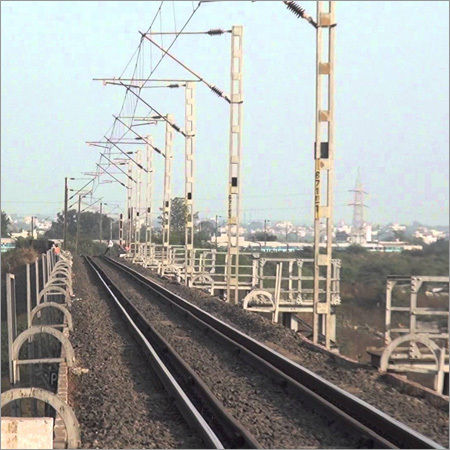
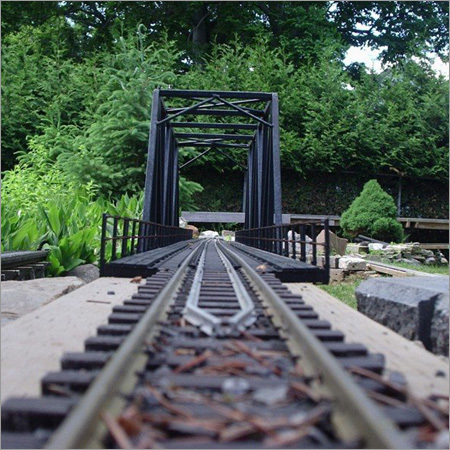
With rich industry and market knowledge, we are able to manufacture and supply a wide gamut of quality assured Bridge Approaches. Offered approaches are used for constructing bridges that overcome the obstacles in way of passing locomotives. These are constructed utilizing innovative techniques under the guidance of dexterous professionals. Furthermore, the provided Bridge Approaches can be availed from us at marginal prices.
Key Points:
- High strength
- Longer service life
- Robust design
- Corrosion resistance
Precision Engineering for LongevityBridge Approaches are precisely engineered using civil and structural technology to deliver superior load-bearing performance and withstand varied environmental stresses. Each approach structure incorporates high-quality TMT/rebar reinforcement and adapts seamlessly to project locations, ensuring long-term functionality and minimal settlement issues. These structures are backed by a design life of over five decades with regular upkeep.
Optimized for Safety, Stability, and FlowSafety and smooth traffic flow are prioritized with advanced expansion joint systems that enable thermal movement without damage. Integrated drainage solutions effectively manage water runoff, safeguarding the approach and main bridge structures from water-related deterioration. The surfaces are finished smooth or textured for optimal traffic suitability, providing reliable access under all weather conditions.
Versatile Applications and Custom SolutionsFrom national highways and railways to flyovers and pedestrian crossings, Bridge Approaches can be customized to suit various infrastructure needs. Tailoring options in size, finish, hardness, and weight ensure compatibility with diverse site conditions and usage requirements. Prefabricated and on-site construction techniques suit both rapid deployment and complex project needs.
FAQs of Bridge Approaches:
Q: How are bridge approaches designed to handle heavy traffic and environmental loads?
A: Bridge approaches are engineered following IRC/ASTM standards, utilizing reinforced concrete, steel, and earth fill to withstand significant vehicular and environmental stresses. The inclusion of TMT/rebar ensures structural integrity, and customized load-bearing capacity aligns with specific project demands.
Q: What is the process for constructing bridge approaches using prefabricated and in-situ methods?
A: Construction can involve both prefabrication and in-situ (on-site) techniques. Prefabricated units are manufactured off-site, transported, and assembled, while in-situ construction forms the structure directly on location using heavy machinery, formwork, and compaction tools for optimal strength and fit.
Q: When should integrated expansion joints be used in bridge approaches?
A: Expansion joints are crucial in bridge approaches to accommodate thermal movements caused by temperature fluctuations. They should be installed during the initial construction phase to prevent cracking or structural damage over the service life of the approach.
Q: Where are these bridge approach structures most commonly applied?
A: Bridge approaches are widely utilized in infrastructure projects such as highways, railways, pedestrian bridges, flyovers, and overpasses, where seamless connection and durability are essential for safe and efficient passage.
Q: What type of drainage system is incorporated into bridge approaches and why is it important?
A: An integrated approach drainage system is included to channel rainwater and runoff away from the structure, preventing erosion, water accumulation, and damage. Effective drainage is vital for maintaining structural longevity and traffic safety.
Q: How does soil interaction engineering benefit the durability of bridge approaches?
A: Advanced soil interaction and settlement control techniques are applied to ensure compatibility between the approach structure and underlying soil. This minimizes differential settlement and foundation issues, promoting long-term durability.
Q: What is the expected service life of the bridge approaches and how can it be maintained?
A: With proper maintenance, these bridge approach structures are designed for a service life of at least 50 years. Regular inspections, drainage cleaning, and timely repairs are recommended to preserve their integrity and performance.




 Send Inquiry


 Send Inquiry